
Featured
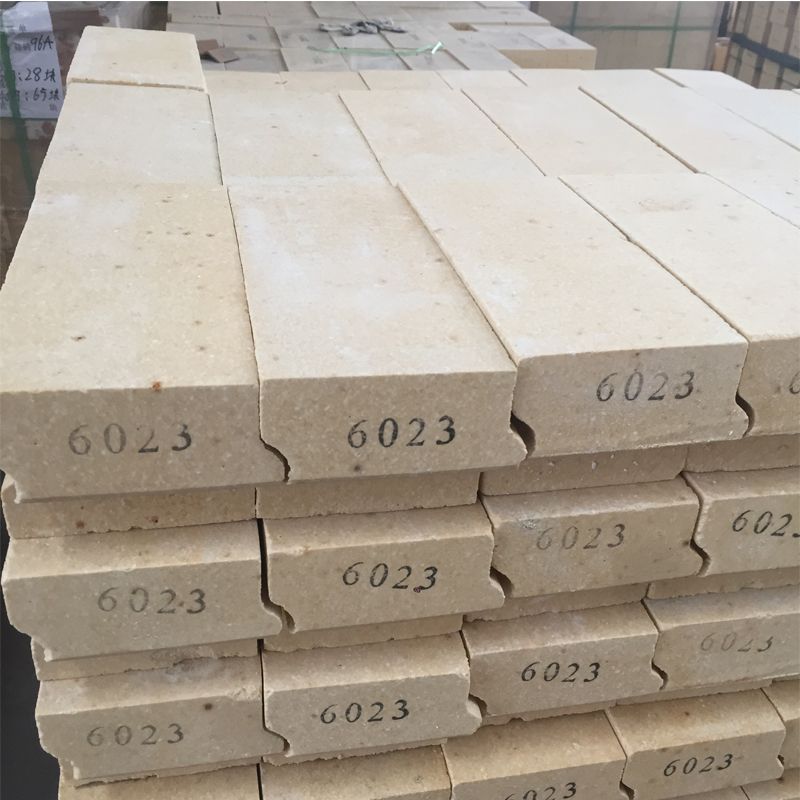
Silica Brick
Silica brick with SiO₂≥94%, refractoriness ≥1690℃ and RUL ≥1620℃ shows no high-temperature shrinkage, stable under long-term load and resistant to acid slag and atmospheres—the recommended choice for coke ovens.
Learn More →Glass Furnace Crown · Crown
The glass furnace crown is built of silica bricks—the most important load-bearing and sealing structure. Crown silica bricks long-term bear high temperature (above 1600℃), alkali-vapor attack and structural load; corrosion and erosion are the main failure modes, directly affecting furnace life and glass quality.
Alkali-vapor attack: alkali vapor (Na₂O, K₂O) volatilized from batch condenses on the crown, reacting with the silica surface into low-melting silicates, forming "drips" and surface erosion. High-temperature creep: long-term hot load creeps and deforms the bricks; the arch settles. Thermal shock: heating/cooling and temperature swings crack the bricks (silica has poor thermal-shock resistance—heating must be strictly controlled). Structural stress: arch expansion and support displacement create stress.
After erosion, the arch thins and weakens with collapse risk; eroded material drips into the melt, affecting glass quality; crown life shortens, forcing cold repair and shortening the furnace campaign.
Select crown silica bricks for "high purity + alkali resistance + creep resistance":
Masonry control: build symmetrically from both sides toward the center with precise key bricks; joints ≤1mm with full mortar. Insulation: layer crown-top insulation with staggered joints. Kiln heating: silica resists thermal shock poorly—heat strictly per the slow curve (especially near the 573℃ crystal transformation). Monitoring: monitor arch deformation and surface temperature during heating and operation.
Control batch alkali content and furnace atmosphere to reduce alkali-vapor generation; inspect crown surface and temperature distribution regularly, evaluating erosion and deformation promptly. Use crown monitoring systems to track condition and plan cold repair at the right time.
Silica brick with SiO₂≥94%, refractoriness ≥1690℃ and RUL ≥1620℃ shows no high-temperature shrinkage, stable under long-term load and resistant to acid slag and atmospheres—the recommended choice for coke ovens.
Learn More →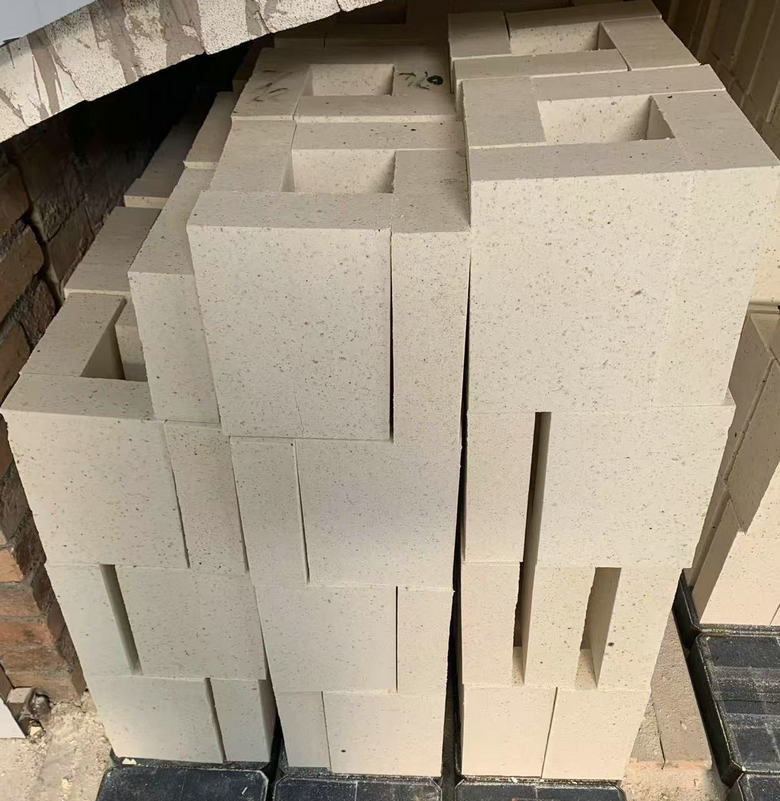
Lightweight silica brick (SiO₂≥92%, 1550℃ max, bulk density 1.2-1.5 g/cm³, RUL ≥1550℃) combines silica refractoriness with lightweight insulation and matches silica brick thermal expansion.
Learn More →Contact Us
 WeChat · 17513376789