
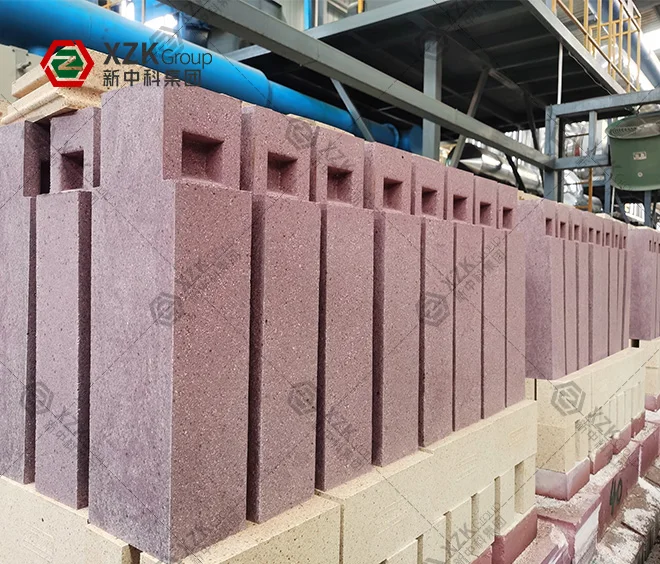
Chrome-Corundum Brick
Chrome-corundum brick (Al₂O₃≥90%, Cr₂O₃ 3-8%, refractoriness ≥1950℃) adds chromia to a corundum base for strong resistance to glass melt attack, slag and washout.
Learn More →Entrained-flow Gasifier · Chamber
The gasification chamber of an entrained-flow gasifier is where coal slurry/powder reacts with oxygen at 1400–1600℃. The lining long-term bears high-temperature slag, high-velocity gas and thermal shock. Brick erosion is the main lining failure, directly deciding gasifier maintenance cycles.
High-temperature slag attack: liquid slag from gasification (coal-ash slag) chemically attacks and dissolves the bricks. High-velocity gas scouring: hot gas carrying coal particles and slag scours the bricks at high speed. Thermal shock: start/stop and load swings cause rapid temperature changes, thermally cracking the bricks. Penetration-spalling: slag penetrates joints and pores into an altered layer that spalls, carrying brick away.
After erosion thins the bricks, shell temperature and heat load rise; in severe cases slag reaches the water wall with burn-through risk; forced shutdown shortens the gasifier operating cycle.
Select the gasification chamber for "high slag resistance + thermal-shock resistance":
Masonry control: ring-lay with tight locking, joints ≤1.5mm and full mortar. Key brick: process precisely and wedge tight. Furnace heating: heat slowly per the curve to avoid moisture and thermal-shock damage. Slag coating: build the slag layer progressively after feed to protect the bricks.
Control gasification temperature and oxygen-coal ratio, stabilizing furnace condition; monitor chamber wall temperature and heat load, assessing promptly on anomalies. At maintenance, measure residual brick thickness and replace zones beyond limits; record erosion data to optimize grade and operation.
Chrome-corundum brick (Al₂O₃≥90%, Cr₂O₃ 3-8%, refractoriness ≥1950℃) adds chromia to a corundum base for strong resistance to glass melt attack, slag and washout.
Learn More →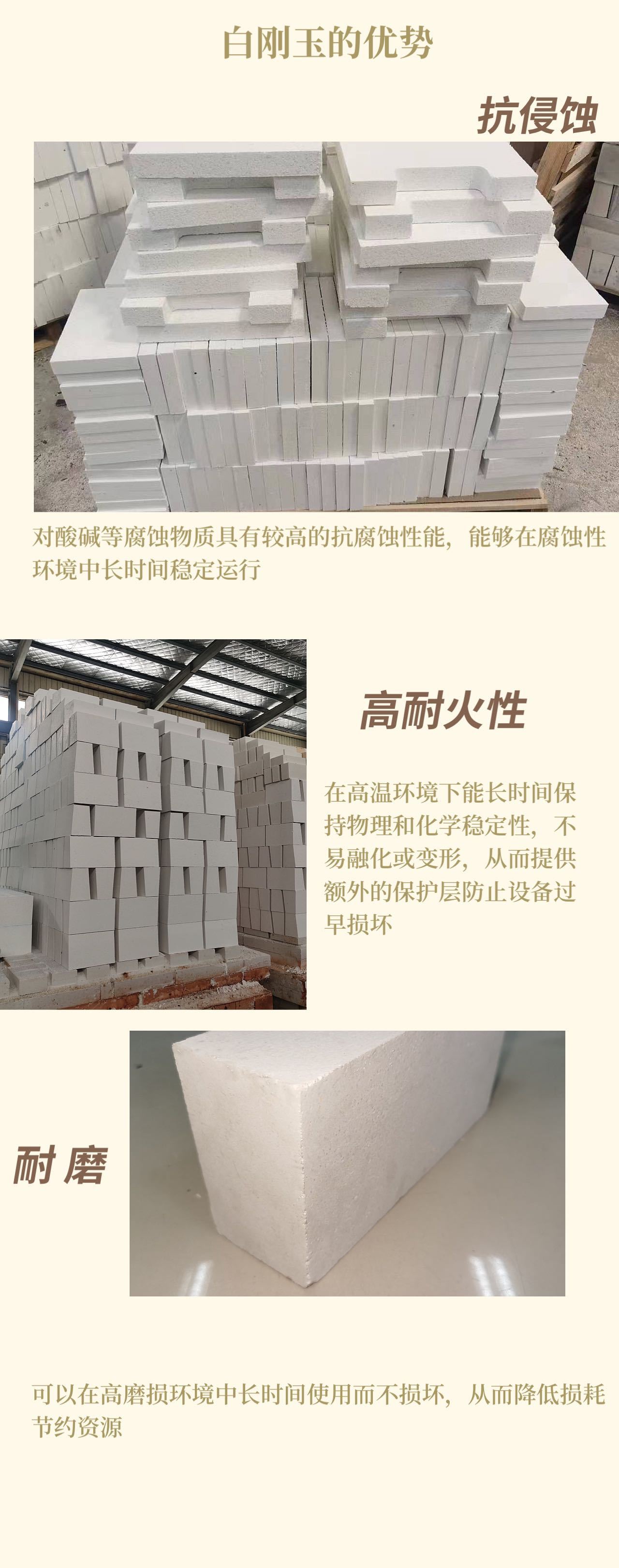
Corundum brick with Al₂O₃≥99% and refractoriness ≥2000℃ is chemically pure, resisting high temperature and gas/dust scouring—the premium refractory for critical hot zones.
Learn More →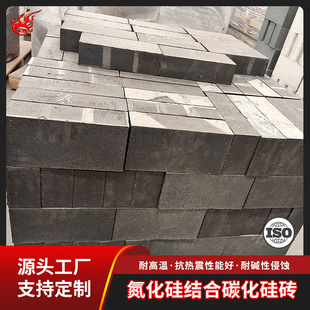
Silicon carbide brick (SiC≥85%, refractoriness ≥1900℃, CCS≥120MPa) offers high thermal conductivity, extreme wear resistance, thermal-shock resistance and molten-salt resistance—preferred for waste incineration and hot abrasion duties.
Learn More →Contact Us
 WeChat · 17513376789