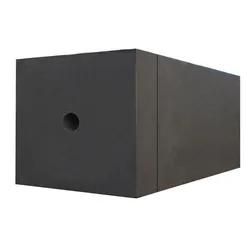
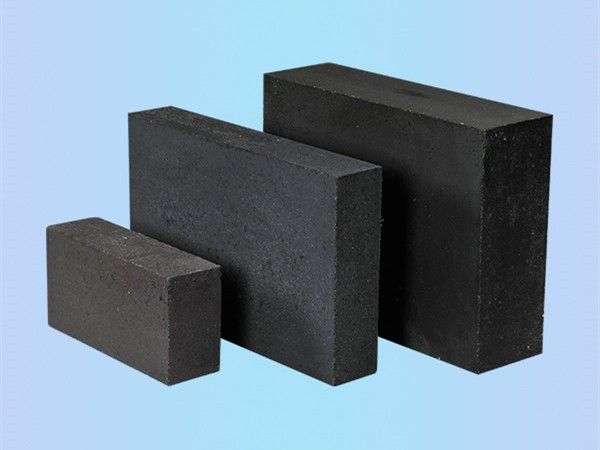
Blast Furnace Hearth Carbon Block
Carbon BricksCustomizable

Blast Furnace Hearth Carbon Block

BF hearth carbon blocks including micropore and semi-graphite grades offer high thermal conductivity and strong resistance to molten iron penetration, key to long-lasting blast furnace bottoms and hearths.

Technical Data

Bulk density≥1.55 g/cm³
Apparent porosity≤20%
Cold crushing strength≥35 MPa
Thermal conductivity (20℃)≥10 W/(m·K)
Ash content≤10%
Molten iron erosion resistance优

Description

Blast furnace hearth carbon blocks are large carbon refractory products made from high-quality anthracite and graphite, processed by high-temperature baking or graphitization. They are classified as ordinary carbon blocks, micropore carbon blocks and semi-graphite carbon blocks. Carbon blocks offer high thermal conductivity, strong resistance to molten iron penetration and low thermal expansion, making them the classic long-life material for blast furnace bottoms and hearths. Combined with proper cooling structure and ramming layer design, they enable BF campaigns of 10 years or more.

Key Features

  • Strong resistance to molten iron penetration: The fine pores of micropore blocks effectively stop molten iron from penetrating the body, preventing "floating" and cracking.
  • High thermal conductivity: Quickly transfers bottom heat to the cooling system, reducing thermal stress.
  • Low thermal expansion: Dimensionally stable at high temperature for safe, reliable structures.
  • Alkali slag resistance: Good resistance to basic slag and alkali metal vapor.
  • Flexible sizing: Large sizes reduce joints and improve overall sealing.

Typical Applications

  • Blast furnace bottom, hearth and iron-notch areas
  • Submerged arc furnace (ferrosilicon, ferromanganese) bottoms
  • Ferroalloy electric furnace linings
  • Carbon baking furnace linings

FAQs

What is the difference between ordinary, micropore and semi-graphite carbon blocks?

Ordinary carbon blocks are cost-effective; micropore blocks have finer pores and stronger resistance to iron penetration, suitable for the hot face of the bottom; semi-graphite blocks have the best thermal conductivity for use with cooling staves. Selection depends on furnace volume, cooling design and operating practice.

Are there special requirements for laying carbon blocks?

Joint control is critical; thin-joint laying with carbonaceous mortar is standard, combined with ramming and leveling layers. We provide laying schemes and on-site technical guidance.

What is the delivery lead time?

Major reline orders generally take 30–60 days depending on specifications and quantity; we recommend placing orders 2–3 months ahead.

Can sizes be customized to our BF drawings?

Yes. We support custom processing according to bottom brick-type drawings and provide an overall solution from material selection and layout to supply.

Quotation & Custom Inquiry

Submit an inquiry or custom requirement for this product; reply within 24 hours

Related Products

Silicon Nitride Bonded Silicon Carbide Brick
Customizable
Special & Special-Shaped Bricks

Silicon Nitride Bonded Silicon Carbide Brick

Si3N4 bonded SiC brick is made of high-purity silicon carbide with in-situ formed silicon nitride bond, featuring excellent thermal shock resistance, high strength, high thermal conductivity and oxidation resistance for blast furnace tuyeres, aluminum cell sidewalls and kiln furniture.

Chemical composition SiC≥72%
Learn More →
High-Alumina Brick LZ-55
Featured
High-Alumina BricksIron & Steel Metallurgy

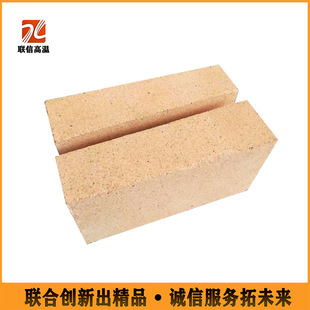
High-Alumina Brick LZ-55

High-alumina brick LZ-55 (Al₂O₃≥55%) with refractoriness ≥1770℃ offers dense structure, wear resistance against gas scouring and combined cold/hot strength—one of the most widely used shaped refractories.

Al₂O₃ Content≥55%
Learn More →
High-Alumina Brick LZ-65
High-Alumina BricksIron & Steel Metallurgy

High-Alumina Brick LZ-65

High-alumina brick LZ-65 (Al₂O₃≥65%, refractoriness ≥1790℃) has a higher corundum/mullite phase ratio for stronger slag resistance, higher temperature rating and better hot load-bearing capacity.

Al₂O₃ Content≥65%
Learn More →
Low-Creep High-Alumina Brick
High-Alumina BricksIron & Steel Metallurgy

Low-Creep High-Alumina Brick

Low-creep high-alumina brick with Al₂O₃≥75% and creep rate ≤0.8% (1550℃×50h), RUL ≥1550℃. Minimal deformation under long-term hot load, engineered for load-bearing hot stove domes and walls.

Al₂O₃ Content≥75%
Learn More →
17513376789
客服微信二维码客服微信 · 17513376789