
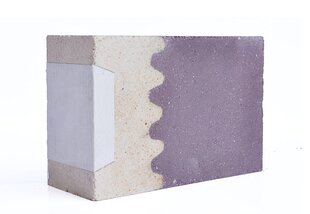
Silicon-Mullite Brick
Silicon-mullite brick (Al₂O₃≥55%, SiC≥20%) combines mullite thermal-shock resistance with SiC high thermal conductivity and wear resistance, with low conductivity for energy saving.
Learn More →Cement Rotary Kiln · Transition Zone
The transition zone of a cement rotary kiln lies between the burning and preheating zones. Lining temperature is high and coating is unstable (attaching and detaching), bearing combined thermal shock, mechanical wear and alkali/sulfur attack. Transition-zone cracking and spalling are high-frequency kiln lining failures.
Unstable coating: coating attachment is unstable; fall-off takes brick surface with it, cycling to accelerate thinning and spalling. Thermal shock: coating attach/detach causes sharp surface-temperature swings; thermal-shock stress cracks and spalls the bricks. Alkali/sulfur attack: alkali and sulfur enrich in the transition zone, reacting into expanding minerals. Mechanical wear: tumbling material abrades the bricks.
After cracking and spalling, shell temperature and heat load rise with higher red-spot risk; thinning shortens lining life and forces kiln shutdown for replacement, hurting availability.
Select transition-zone bricks for "high thermal-shock resistance + alkali/sulfur resistance":
Masonry control: ring-lay with staggered joints and tight locking, joints ≤2mm. Key brick: process precisely and wedge tight. Kiln heating: follow the curve, avoiding fast heating that thermal-shocks the bricks. Coating: manage kiln condition to help form relatively stable transition-zone coating.
Stabilize kiln operation to reduce sharp temperature swings; monitor shell temperature and red-spot signs. At maintenance, check transition-zone residual thickness and spalling, replacing thinned zones and recording lining life to optimize grade.
Silicon-mullite brick (Al₂O₃≥55%, SiC≥20%) combines mullite thermal-shock resistance with SiC high thermal conductivity and wear resistance, with low conductivity for energy saving.
Learn More →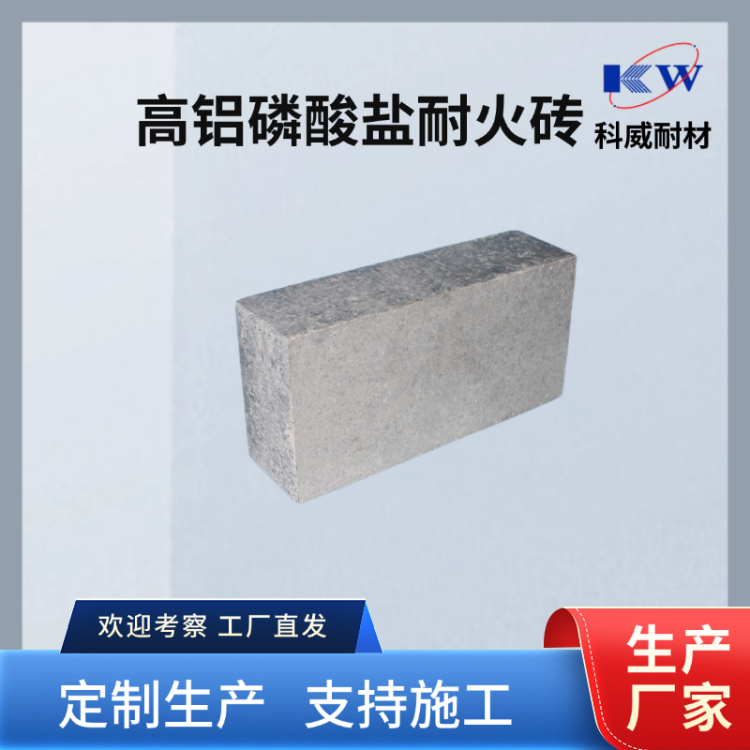
Spalling-resistant high-alumina brick introduces ZrO₂ (3-6%) for transformation and microcrack toughening. Al₂O₃≥70%, thermal-shock stability ≥15 cycles, greatly improved resistance to structural spalling under frequent temperature cycling.
Learn More →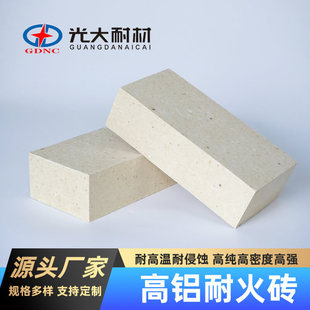
Low-creep high-alumina brick with Al₂O₃≥75% and creep rate ≤0.8% (1550℃×50h), RUL ≥1550℃. Minimal deformation under long-term hot load, engineered for load-bearing hot stove domes and walls.
Learn More →Background The burning zone of a cement rotary kiln is the core clinker-firing zone. Lin…
Problem Details →Why the cooling zone spalls In a cement rotary kiln, the cooling zone sits next to the b…
Problem Details →Contact Us
 WeChat · 17513376789