
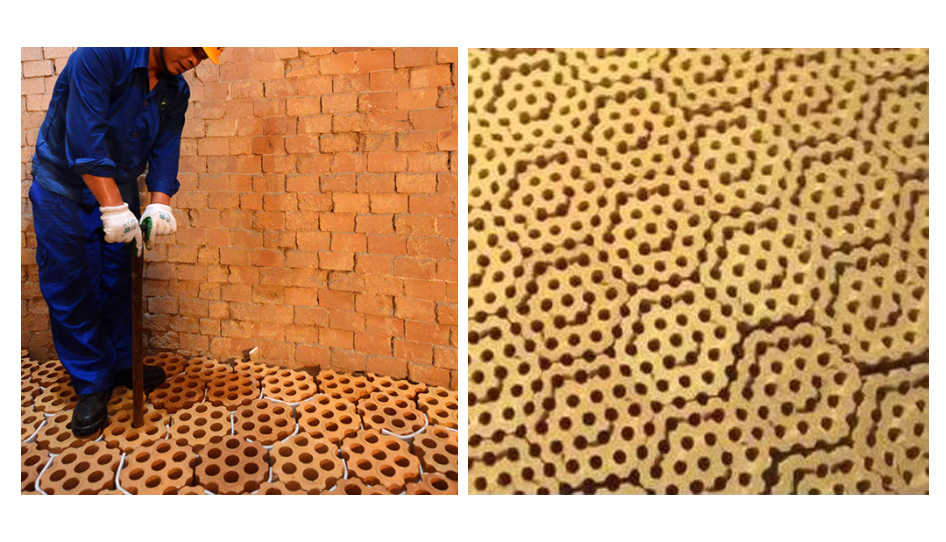
Checker Brick
Checker brick with porous/honeycomb custom holes (Al₂O₃ 45-75%, RUL ≥1500℃) maximizes specific surface area for efficient regenerative heat exchange—the core element of hot stove checkers.
Learn More →Regenerator · Checkerwork
Glass furnace regenerator checkerwork recovers waste-heat and preheats combustion air, working in "heating-cooling" cycles with top checkers above 1400℃, attacked by alkali vapor, sulfates and dust-laden waste gas. Checkerwork corrosion and nodulation are the main regenerator failure modes.
Alkali-vapor attack: alkali vapor (Na₂O, K₂O) in waste gas reacts with checker surfaces into low-melting silicates, melting and deforming the surface. Sulfate attack: fuel sulfur reacts with alkali into sulfates (Na₂SO₄) that condense, penetrate and attack the bricks. Nodulation and plugging: erosion products and dust bond on checker surfaces into nodules that plug holes and lower heat exchange. Thermal shock: reversals and temperature swings shock the checkers.
After corrosion and nodulation, regenerator heat exchange drops, combustion-air temperature falls and fuel consumption rises; plugged holes raise gas resistance and furnace pressure swings, forcing shutdown for cleaning or checker replacement.
Select checkerwork for "high alkali resistance + high thermal-shock resistance":
Masonry control: lay checkers per design with aligned holes and joints ≤2mm. Layer inspection: check hole passage and brick integrity layer by layer. Support installation: mount the bottom support firmly and level. Bake-out: follow the curve to avoid residual moisture.
Monitor waste-gas temperature, combustion-air temperature and checker pressure drop; analyze for nodulation/plugging on anomalies. Clean checker surfaces regularly; at maintenance, inspect checkers layer by layer and replace severely eroded upper zones; record erosion data to optimize zonal selection.
Checker brick with porous/honeycomb custom holes (Al₂O₃ 45-75%, RUL ≥1500℃) maximizes specific surface area for efficient regenerative heat exchange—the core element of hot stove checkers.
Learn More →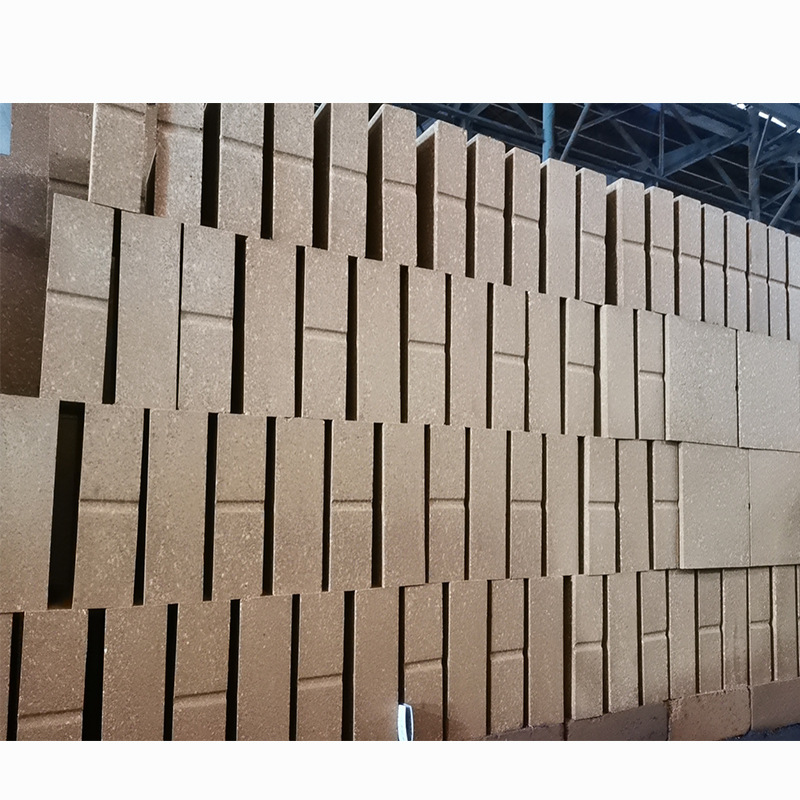
Magnesia brick with periclase as the main phase (MgO≥95%, refractoriness ≥2000℃) offers outstanding resistance to basic slags and iron-oxide slag plus excellent high-temperature performance.
Learn More →
High-alumina brick LZ-55 (Al₂O₃≥55%) with refractoriness ≥1770℃ offers dense structure, wear resistance against gas scouring and combined cold/hot strength—one of the most widely used shaped refractories.
Learn More →Contact Us
 WeChat · 17513376789