
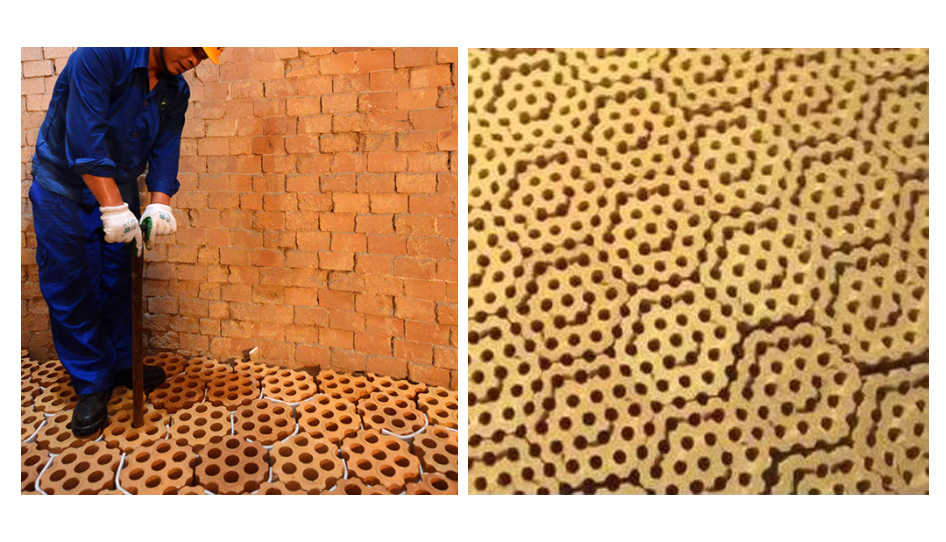
Checker Brick
Checker brick with porous/honeycomb custom holes (Al₂O₃ 45-75%, RUL ≥1500℃) maximizes specific surface area for efficient regenerative heat exchange—the core element of hot stove checkers.
Learn More →Hot Blast Stove · Checker Chamber
Hot stove checker bricks carry regenerative heat exchange, working through periodic "heating on-gas / cooling on-blast" temperature cycling, with top checkers above 1400℃. Checker damage and collapse are the main problems in later stove life, directly affecting blast temperature and stove life.
Thermal-shock damage: checkers bear thermal-shock stress in cyclic heating/cooling; repeated action cracks and fractures them. High-temperature creep and settling: top checkers bear load at high temperature long-term; material creep settles and deforms them. Dust bonding: gas-borne dust bonds on checker surfaces and plugs holes, lowering heat exchange. Alkali attack: alkali in gas attacks checkers into expanding minerals, accelerating damage. Support failure: bottom support damage collapses the checker mass.
After checker damage and collapse, heat-exchange area and efficiency drop, lowering blast temperature; collapsed checkers may plug flues or damage valves, forcing shutdown and hurting blast temperature and smelting performance.
Select checkers for "high thermal-shock resistance + high creep resistance + high heat storage":
Masonry control: lay checkers per design with aligned holes and joints ≤2mm. Layer inspection: check hole passage and brick integrity layer by layer, replacing damaged bricks. Support installation: mount bottom support firmly and level. Acceptance: check overall verticality and hole-passage rate after construction.
Monitor blast temperature, waste-gas temperature and checker pressure drop; analyze for damage/plugging on anomalies. At maintenance, inspect checkers layer by layer and replace damaged/collapsed zones; clean hole dust regularly to extend checker life.
Checker brick with porous/honeycomb custom holes (Al₂O₃ 45-75%, RUL ≥1500℃) maximizes specific surface area for efficient regenerative heat exchange—the core element of hot stove checkers.
Learn More →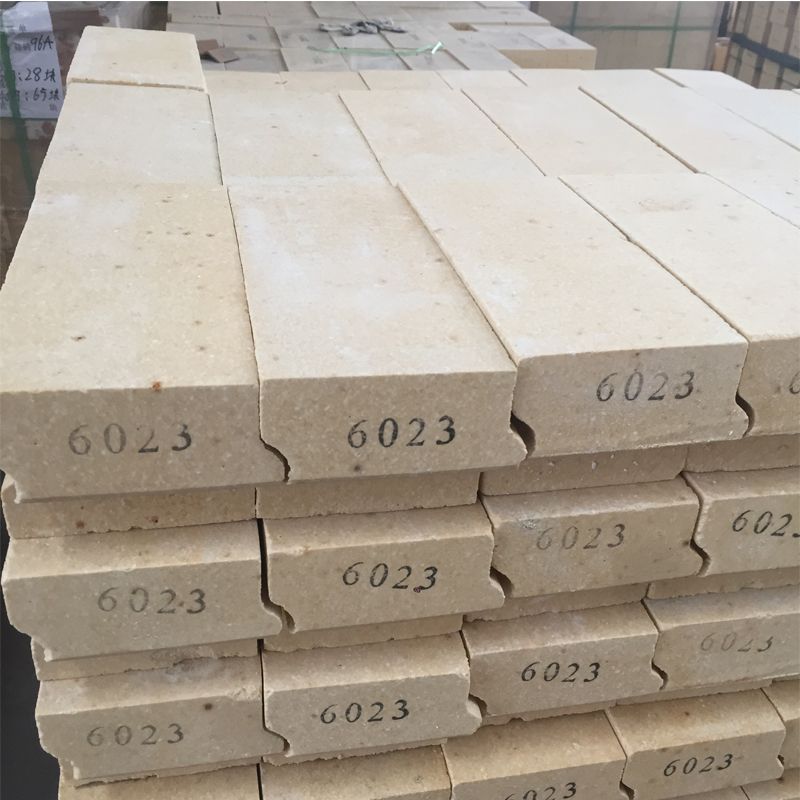
Silica brick with SiO₂≥94%, refractoriness ≥1690℃ and RUL ≥1620℃ shows no high-temperature shrinkage, stable under long-term load and resistant to acid slag and atmospheres—the recommended choice for coke ovens.
Learn More →
High-alumina brick LZ-65 (Al₂O₃≥65%, refractoriness ≥1790℃) has a higher corundum/mullite phase ratio for stronger slag resistance, higher temperature rating and better hot load-bearing capacity.
Learn More →Contact Us
 WeChat · 17513376789