Integral Stopper Rod
Special & Special-Shaped BricksIron & Steel Metallurgy

Integral Stopper Rod

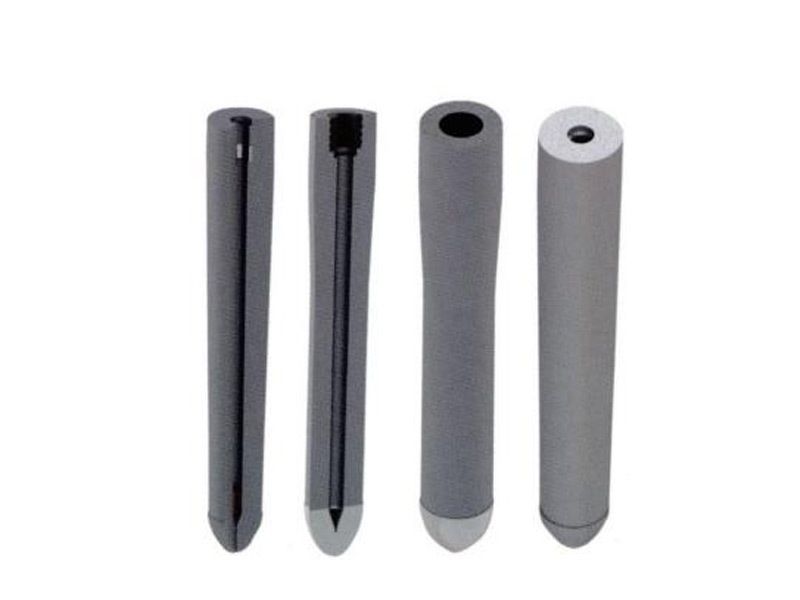
Integral stopper rod is the core flow-control refractory in the continuous casting tundish. Alumina-carbon or magnesia-carbon grades resist thermal shock and erosion with a durable slag line. Argon-blowing structures and rod-head shapes are customized for stable multi-heat flow control.

Technical Data

Al₂O₃ (Al2O3-C)40 – 55%
MgO (MgO-C)≥ 50%
C (carbon bond)≥ 15%
Bulk density≥ 2.40 g/cm³
CCS≥ 25 MPa
Apparent porosity≤ 18%
Thermal shock (1100℃ water)≥ 5 次

Description

Integral Stopper Rod

Role in Continuous Casting

Molten steel in the tundish flows into the mould through the upper nozzle. The stopper rod is mounted on the tundish cover with its head against the nozzle bowl. A servo mechanism lifts and lowers the rod, continuously adjusting the gap from fully closed to maximum opening, and thus the steel flow. The rod must stay free after long immersion: the body must not stick to steel, the head must not crack from thermal shock, and the slag line must not erode thin enough to break. Any failure means a casting interruption.

Alumina-Carbon vs. Magnesia-Carbon

Mainstream stopper grades are Al2O3-C and MgO-C. Alumina-carbon rods use bauxite or corundum aggregate with graphite as the carbon source; excellent thermal shock resistance suits most plain and alloy steel casting and is the most widely used type. Magnesia-carbon rods resist basic slag better and suit aluminium-killed and calcium-treated steels or severe slag-line conditions. Both rely on a carbon-bonded network for conductivity and thermal shock resistance, so anti-oxidation treatment (glaze or coating) is an essential manufacturing step.

Rod-Head Shape and Flow Control

The rod-head profile defines the flow regulation curve. Some profiles give a gentle response at small openings for fine adjustment; others give a quick rise at larger openings for high casting speed. The design balances flow-control sensitivity against erosion resistance: too sharp a head regulates finely but wears fast; too blunt lasts longer but cannot stabilize small openings. Rod heads are therefore customized per casting practice - the source of stopper customization.

Argon-Blown Stoppers

Modern casting widely uses argon-blown stoppers with an internal gas channel delivering argon to the nozzle area. Argon stirs the steel near the nozzle to prevent clogging, suppresses reoxidation and helps inclusion flotation. The channel must deliver a stable flow without leaking through the body - gas exits around the head into the nozzle. Channel sealing and anti-clogging are key manufacturing difficulties.

Failure Modes in Service

Four typical failure paths: thermal-shock cracking, mainly at start-up or during violent temperature swings, destroying sealing; slag-line erosion thinning the body with break risk; oxidation decarburization embrittling the carbon bond; and misalignment or nozzle mismatch causing head eccentric wear and poor closure. Standard practice: full preheating before casting, alignment during installation, controlled temperature swings, and regular checks on body thinning.

Henan Songrui New Refractory Materials Co., Ltd. customizes stopper grades and drawings for steel grades and caster types.

Key Features

  • Stable flow control: continuous gap adjustment with steady response.
  • Thermal shock resistance: carbon-bonded network survives start-up.
  • Erosion resistance: wear-resistant head and alkali-resistant slag line.
  • Al2O3-C or MgO-C: selected by steel grade and slag-line conditions.
  • Argon-blowing option: stable channel, no gas leakage.
  • Custom head: flow curve and mating dimensions designed per casting practice.

Typical Applications

  • Flow control in continuous casting tundishes.
  • Bloom, slab, billet and round-billet casting.
  • Aluminium-killed and calcium-treated steels.
  • Argon-blown protective casting.
  • Complete supply with upper nozzles and shrouds.

FAQs

Why is stopper life short with frequent replacement?

Check the failure location first. Slag-line erosion suggests higher MgO content or slag-line design; head cracking points to preheating practice and temperature swings; body embrittlement indicates oxidation protection or storage issues. Most life problems can be traced from failure location and casting records.

Must the stopper rod and nozzle be purchased together?

Not necessarily, but they must match. Head-to-bowl mating dimensions and material compatibility (e.g. carbon content and oxidation potential) affect flow stability and life. Use a matched material system within one sequence and keep mating-dimension records.

Can an argon-blown stopper work without argon?

Flow control still works, but clogging and reoxidation risks rise without argon. Suitable for short sequences or low-demand casting; keep the argon system working and check channel throughput regularly.

Quotation & Custom Inquiry

Submit an inquiry or custom requirement for this product; reply within 24 hours

Related Products

Silicon Nitride Bonded Silicon Carbide Brick
Customizable
Special & Special-Shaped Bricks

Silicon Nitride Bonded Silicon Carbide Brick

Si3N4 bonded SiC brick is made of high-purity silicon carbide with in-situ formed silicon nitride bond, featuring excellent thermal shock resistance, high strength, high thermal conductivity and oxidation resistance for blast furnace tuyeres, aluminum cell sidewalls and kiln furniture.

Chemical composition SiC≥72%
Learn More →
Cordierite-Mullite Kiln Furniture (Saggers, Shelves, Posts)
Special & Special-Shaped Bricks

Cordierite-Mullite Kiln Furniture (Saggers, Shelves, Posts)

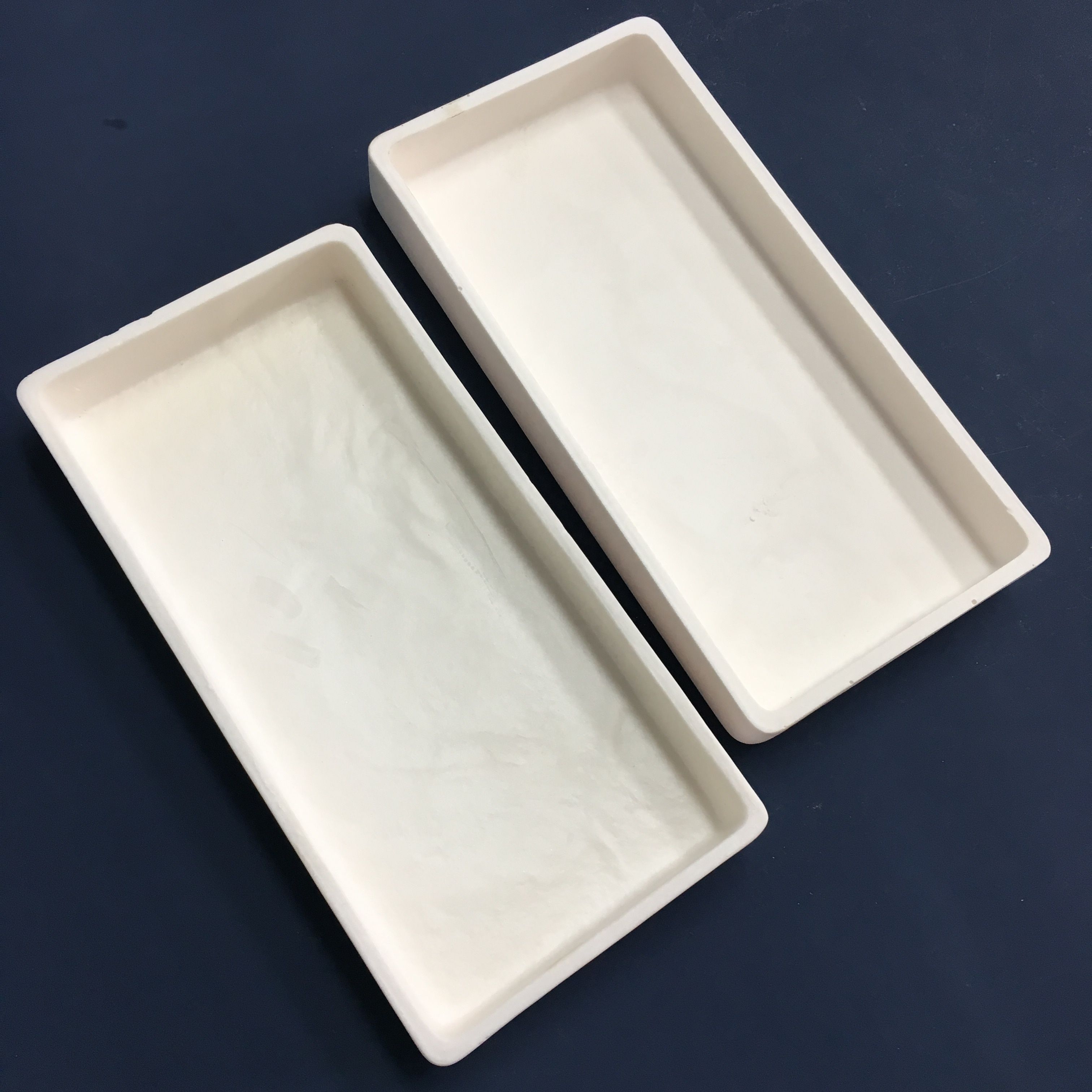
Cordierite-mullite kiln furniture (saggers, shelves, posts and beams) combines low thermal expansion with high refractoriness under load, offering excellent thermal shock resistance and long service life for ceramic, electronic ceramic and magnetic material kilns.

Service temperature1300~1400℃
Learn More →
Slide Gate Plate
Special & Special-Shaped Bricks

Slide Gate Plate

Slide gate plate is the core functional refractory of ladle and tundish slide gate systems, offering high strength, high density, excellent erosion and thermal shock resistance for precise molten steel flow control.

Al2O3 content (Al2O3-C)≥ 75%
Learn More →
Ladle Purge Plug
Special & Special-Shaped Bricks

Ladle Purge Plug

Ladle purge plug (corundum-spinel type) blowing argon at ladle bottom features high and stable permeability, high strength, excellent erosion and thermal shock resistance, homogenizing steel composition and removing inclusions in ladle refining.

Al2O3 content (corundum type)≥ 92%
Learn More →
17513376789
客服微信二维码客服微信 · 17513376789